
Note 01
Timber movement in London homes
Furniture repair often starts with a door that stuck in March and a gap that opened in January. Those two signs are frequently moisture movement, not a failed joint.
Published · Updated
Wood exchanges moisture with the air around it. When the air is drier, many pieces shrink. When the air is damper, they swell. In a London flat that pattern is easy to see and easy to misread. Central heating runs for a long season. Outside walls stay colder than internal walls. People dry washing in the same room as a sideboard. The timber is not being difficult. It is following the room.
What actually changes size
A board barely changes along its length. It changes across its width and, to a smaller degree, in thickness. A table top that is fixed tight into a frame on all four sides has nowhere to go when the heating comes on. The panel can split, or the frame can be pushed out of square. A top that is held with buttons, slots, or a small amount of clearance can move and still sit in the frame.
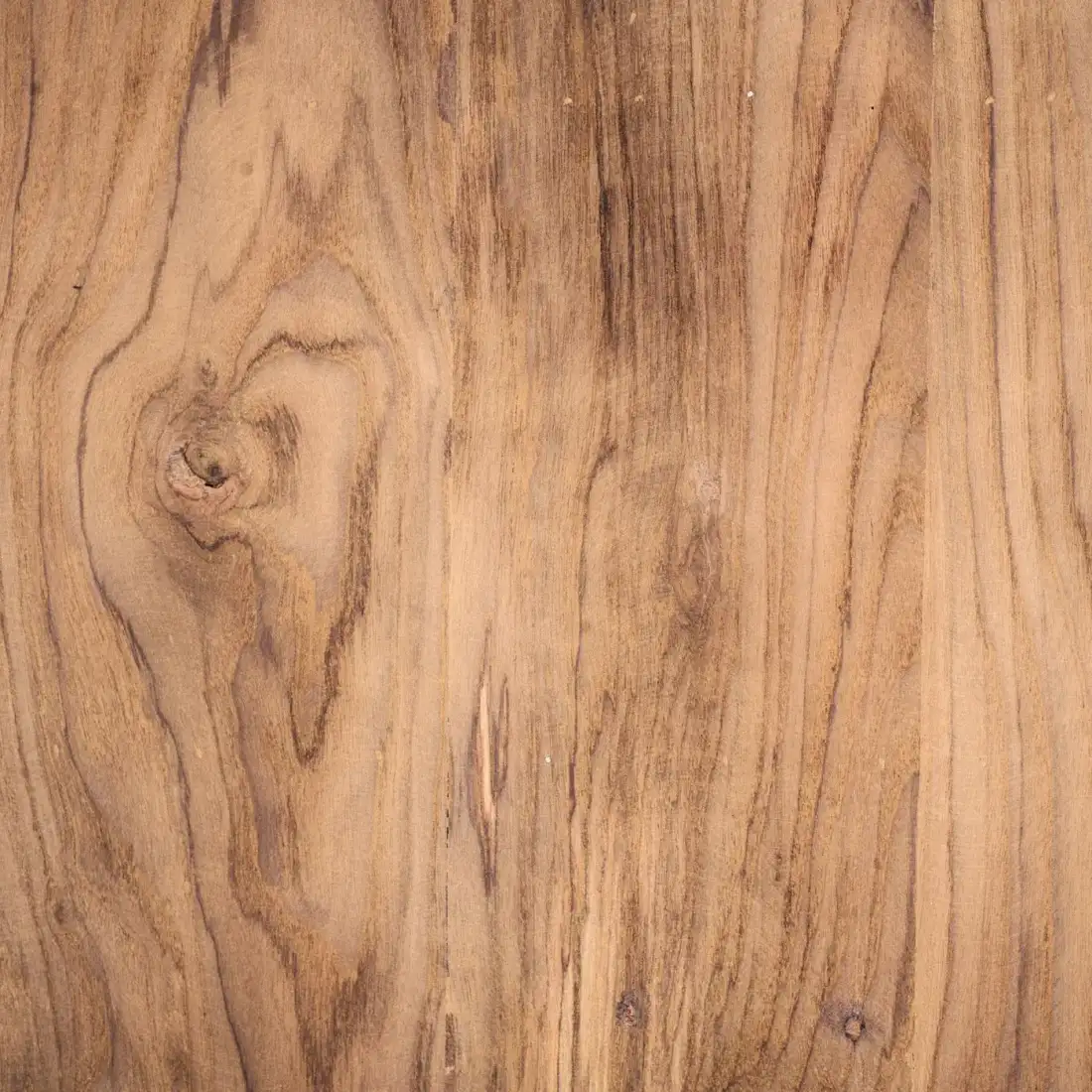
Figure matters. A face with wild, cathedral-shaped grain is often a tangential cut and tends to cup more readily than a straighter radial face. You do not need to name the species to use that idea. Look at whether the board is trying to curl across its width, and whether the curl is worse on the radiator side. Species, old finish, and how the board was sawn all change the amount. This page does not assign a number of millimetres to a particular table.
A heating season and a damp spell
In winter, air indoors is often drier than the air that sat in the same room in September. Doors can shrink and rattle. Mitres can open a hairline on the outside of a corner. A gap can appear at the end of a solid top where it meets a breadboard. In a damp week, or in a room where steam has nowhere to go, the same door can swell and drag on the carpet or on the frame. Drawers can tighten.
A useful test is time, not force. If the door dragged in a wet fortnight and then freed itself when the heating ran, planing the edge would have made a permanent gap. If a split appeared the week a pipe leaked and has not closed, moisture movement is no longer the whole story. Photograph both states if you can. The habit is described on the home page.
Panels, doors, and floors are not the same job
A framed door has a panel sitting in a groove. The panel should be free to move. A finish that has glued the panel into the groove, or a screw driven through the frame into the panel, stops that movement and the panel splits instead. Before anyone sands a high spot, look at the back of the door. A split that starts at a screw is a restraint problem.
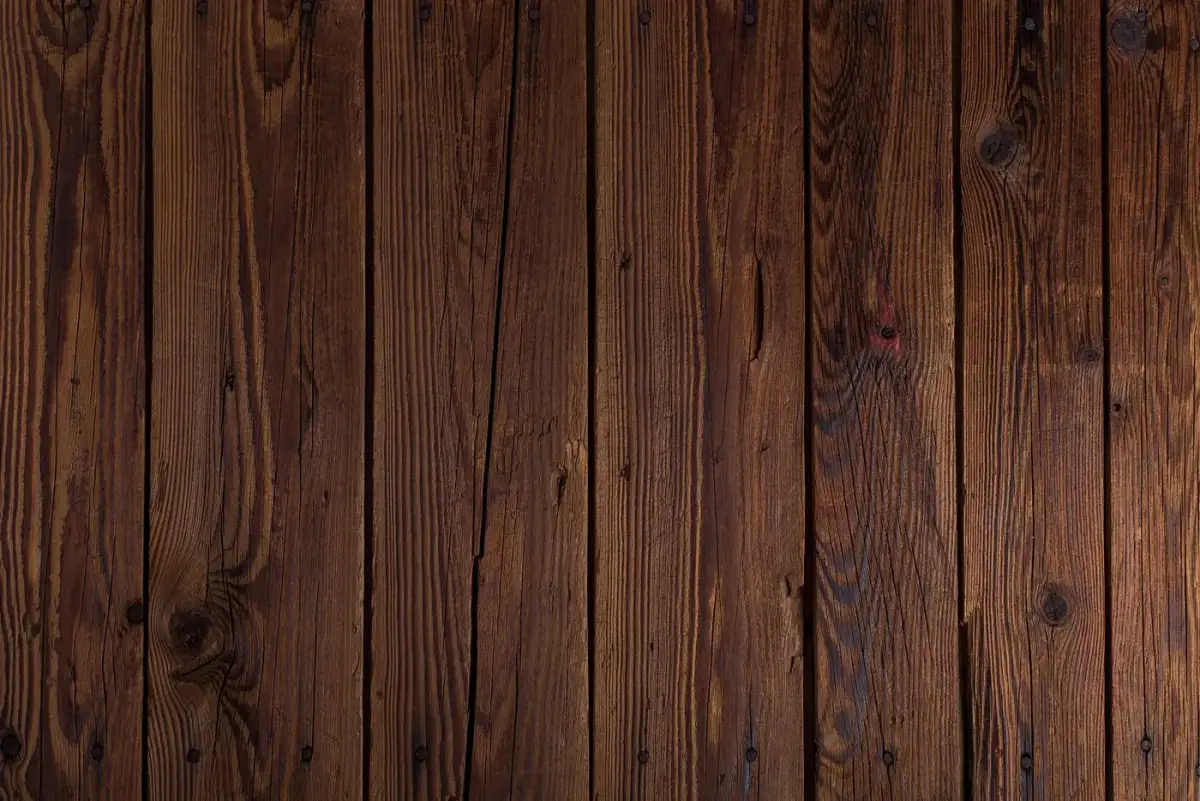
Floorboards are a different assembly, but the gaps in the photograph below are the same direction of movement: across the width of each board. Furniture panels do this more quietly because the sizes are smaller and a finish slows the exchange. It does not stop it.
After a move
A piece that has crossed from a damp store, a van, or another kind of building needs time before you judge a warp. A day on the pavement and a night beside a radiator is not an even climate. Leave it in the room where it will live, away from the direct blast of a heater, and look again after a couple of weeks. A twist that relaxes is a different finding from a twist that stays once the piece has settled.
What to write down before anyone planes
- Which edge sticks, and whether it sticks in winter, in damp weather, or all year.
- Whether a gap closes again in summer.
- Whether the piece sits over a radiator, against an outside wall, or in a steamy room.
- Any leak, flood, or new window in the months before the change.
- A photograph of the whole piece and of the gap, with a ruler if the size matters to you.
Planing a seasonal high spot removes wood that the piece may need when it swells again. Tightening a screw through a moving panel trades a rattle for a split. If the joint itself is loose, the joint note is the next page, not a sanding block.
When it is not ordinary movement
Fresh fine dust under a leg, or a cluster of small round holes with bright edges, is a reason to move that piece away from other timber and to ask someone who deals with wood-boring insects. Do not soak the finish in an insecticide while you guess. A soft, dark patch after a leak can be decay rather than shrinkage. A chair that collapses when sat on is a joint failure, described separately, and should not be used as a seat while you watch the season.
Finish behaviour in front of glass and heat is on the light, heat, and finish page. How to tell a veneered top from a solid one is on the veneer page, because a veneer and its substrate do not move as one piece of wood.
Heating-season signs
- Hairline openings at mitres and at the ends of solid tops.
- Doors that rattle after being tight in autumn.
- A face that cups toward a radiator.
Damp-spell signs
- Doors and drawers that drag, then free themselves later.
- A musty smell with a dark tide line after a leak.
- Metal fittings that show new rust in a steamy room.