
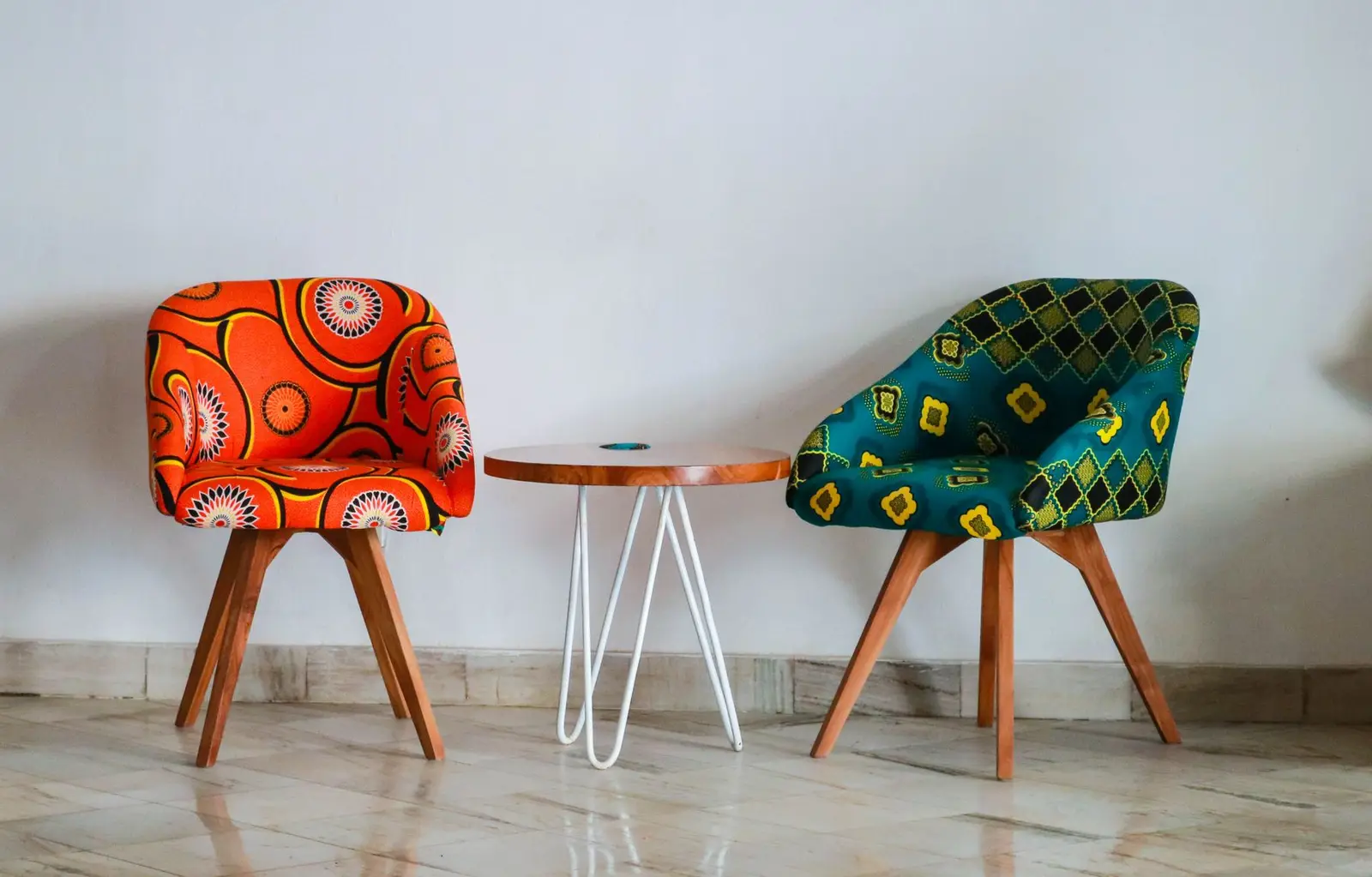
Note 03
Upholstery cloth, pile, and sag
Most of what matters on a covered seat can be seen without taking the cloth off: the weave, the direction of the pile, the line of the seams, and whether the sitter has made a crater.
Published · Updated
Cloth is a family, not a single material
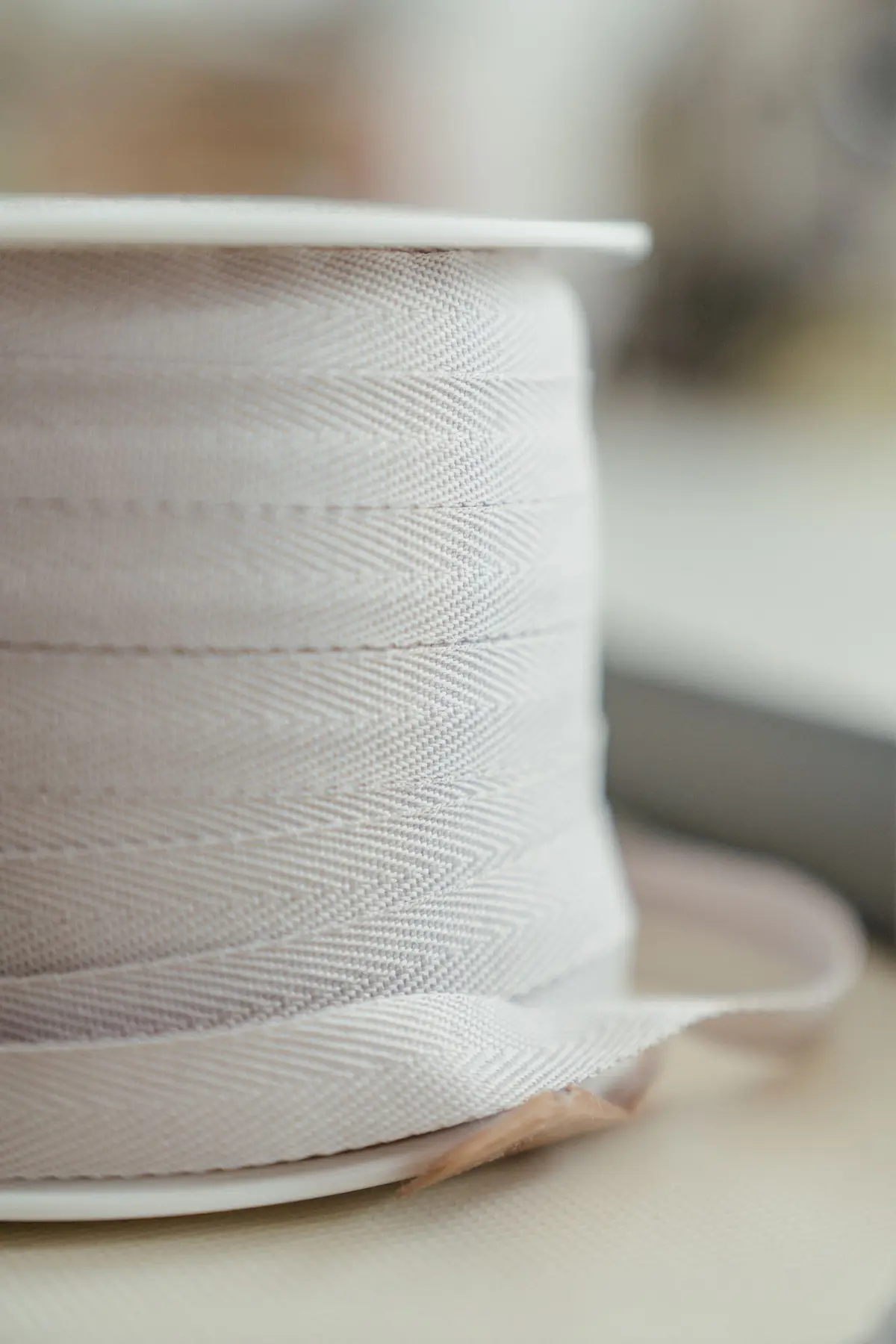
A plain weave shows a simple grid. A twill shows a diagonal. Velvet and other piled cloths have a direction, called the nap, which changes the shade when you look from the other end of the sofa. Bouclé and looped weaves catch and pull. A coated cloth, sometimes sold beside leather, is a textile with a skin and belongs with the leather and coatings note when you are choosing a cleaner.
None of these names tells you how a particular cover will wear in a particular room. A laboratory rub count is one durability signal used in the trade. It is not a prediction for a home with a cat, a south window, and a seat that is always the same person’s seat. Treat a high number as information, not as a promise.
Where wear actually shows
Look at the front edge of the seat, the tops of the arms, and any welt or piping. Those places take the body and the light. A shine on a wool cloth is often flattened fibre, not dirt. A split along a piping cord is a seam under tension. A pull in a loose weave can run if it is tugged. Photograph the pull before you trim anything. A thread that looks spare may be holding the weave.
Patterned cloth adds a second problem. A large motif has a repeat. If a panel is replaced, the motif has to meet its neighbour. Railroaded cloth, run along the roll rather than across it, behaves differently at the seams. You do not need to reupholster anything to measure the repeat: it is the distance from one point in the pattern to the same point again. Write it down if a later conversation is about cloth, not about the frame.
Sag is a shape
A gentle dish where people sit is use. A crater with a hard ridge at the front edge, a seat that tips you forward, or a clicking spring is the support under the cloth. Webbing can stretch. Foam can crumble into powder at a torn corner. A loose spring can telegraph as a lump. Press with a flat hand, not a fist, and notice whether the resistance is even. Do not cut the cover to check. A cut is a project, not an inspection.
The timber under some chairs is doing a separate job. If the show-wood frame rocks, read loose joints before you blame the cushion. If the only problem is a hinge on a storage footstool, the hardware note is the closer match.
Measurements worth taking while the seat is empty
Use a metal tape if you have one, and write millimetres. Cloth compresses, so press lightly and say that you did. These sizes describe the piece. They are not an order form.
-
1
Seat height
Floor to the top of the sitting surface at the front, uncompressed.
-
2
Seat width and depth
Inside the arms, and from the back seam to the front edge.
-
3
Arm and back
Floor to the arm top, and floor to the top of the back. Arms wear where hands rest.
-
4
Pattern repeat
One motif to the next, along and across. Note the nap direction with an arrow in a sketch.
Cleaners, water, and light
Water is not neutral on every cloth. Some viscose and rayon blends stain where they get wet and then dry with a tide line. A small hidden test, under the seat or behind a skirt, tells you more than a label that has worn off. Use a barely damp cloth, not a pour. Blot. Do not soak foam. Sun will fade many dyes on the window arm long before the inner back changes. That is the same room effect described in the light and heat note, on a textile instead of a varnish.
Loose covers can be lifted and compared with the fixed panels under them. If only the loose cover is tired, say so. If the platform under it sags, a wash will not change the shape you sit in.
Return to the catalogue if the seat is really a hard frame with a thin pad, or if the question is the timber showing at the leg.